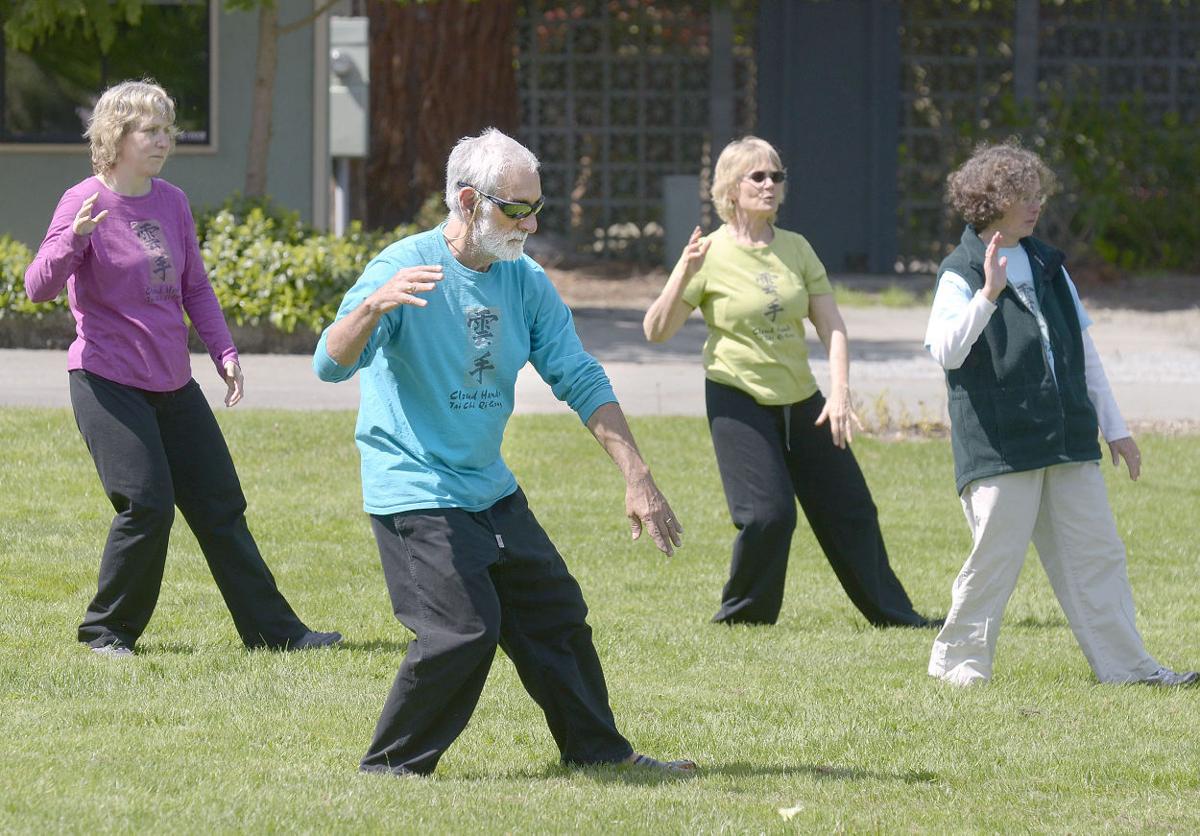
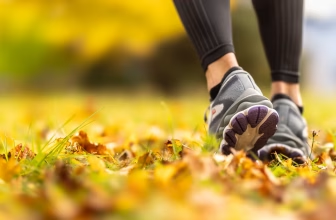
That’s an excellent question — and it’s actually one more runners are beginning to ask! Tai Chi walking may seem far removed from distance running, but it offers powerful, complementary benefits for performance, injury prevention, and recovery. Here’s why runners should seriously consider adding Tai Chi walking to their routine:
🧘♂️ 1. Improves Balance and Coordination
Tai Chi walking strengthens stabilizing muscles in the hips, ankles, and core, improving proprioception — your body’s sense of movement and position.
This helps prevent common running injuries like ankle rolls, IT band issues, and knee strain by improving body alignment and joint stability.
💨 2. Enhances Breathing Efficiency
The slow, mindful pace of Tai Chi walking emphasizes deep diaphragmatic breathing and rhythm.
This teaches runners to coordinate breath with movement, increasing oxygen efficiency and endurance during runs.
🦵 3. Strengthens Supporting Muscles
Each Tai Chi step builds eccentric strength — muscles working as they lengthen — which helps with downhill control and reduces shock on the knees.
It also activates small stabilizers often neglected in typical strength training, leading to smoother, more balanced strides.
🧩 4. Improves Mind-Body Connection
Tai Chi walking encourages awareness of each step, improving running form and mindfulness.
This can lead to better mental focus, pacing, and smoother transitions in stride.
❤️ 5. Aids in Recovery
The gentle, low-impact movements increase circulation and lymph flow, helping to remove metabolic waste and reduce stiffness after hard runs.
Many runners use Tai Chi walking as an active recovery practice — like a meditative cool-down that restores joint mobility.
🧠 6. Reduces Stress and Overtraining Effects
Tai Chi’s meditative quality activates the parasympathetic nervous system, lowering cortisol and helping the body recover from training stress.
It helps balance the “go hard” mindset common in runners with a restorative practice that supports longevity.
🌿 7. Supports Longevity and Joint Health
It teaches efficient, smooth movement that can actually make running feel easier and more natural.
Runners who practice Tai Chi walking maintain joint lubrication, posture, and mobility well into older age — helping them stay injury-free longer.
Here are some reputable university / medical-institution websites that support why adding a slow, mindful movement practice like Tai Chi walking can be beneficial — especially for runners (with some adaptation).
A meta-analysis linking Tai Chi (and walking, jogging) to reduced mortality: suggesting that movement forms similar to walking (and many shared mechanisms) show long-term benefit. PMC
Harvard Health Publishing: Their article on Tai Chi says it “can help maintain strength, flexibility, and balance” and may be ideal for long-term joint and muscular health. Harvard Health
UT Health San Antonio (via its research/news section): Notes that Tai Chi is being studied as a “quantifiable, therapeutic tool” that merges biomechanical movement with balance and coordination benefits — useful for movement stability and rehab. UT Health San Antonio
A research article (via Changsha Normal University & Xiangnan University) comparing Tai Chi vs brisk walking for cognitive function shows that Tai Chi produced superior gains in memory and other cognitive domains. Frontiers