Complete History of Tai Chi (Taijiquan)
Below is a concise but complete history of Tai Chi (Taijiquan), organized as an timeline (chronological sections with clear, factual summaries). At the end you’ll find 5 authoritative links to follow for deeper reading.
1. Philosophical roots — Taiji (before the martial art)
What: The concept of taiji — the dynamic balance of yin and yang — appears in classical Chinese thought (notably the I Ching). Over centuries this cosmological idea informed breathing, health practices (qigong/daoyin) and later martial theories that emphasize softness, yielding and internal power. Encyclopedia Britannica
2. Legendary origins — Zhang Sanfeng (medieval–early modern legends)
What: A widespread legend attributes the origin of Taijiquan to the Taoist sage Zhang Sanfeng (variously dated in folklore). The Zhang Sanfeng story explains neijia (internal) principles and is important culturally, but it is treated as a mythic/legendary origin rather than a firm historical provenance. ymaa.com+1
3. Tangible martial origins — Chen Village and Chen Wangting (late Ming / 1600s)
What: The best-documented historical lineage traces Taijiquan to the Chen family of Chenjiagou (Chen Village) in Henan province. Chen Wangting (17th century) is widely credited with synthesizing earlier Quan, weapons practice, qigong and medicine into an organized family system that became Chen-style Taijiquan — the technical ancestor of most later styles. Features include spiraling “silk-reeling” movement and alternating slow/fast sequences. Wikipedia+1
4. Transmission and branching — Yang, Wu, Sun, and Wu/Hao styles (18th–19th centuries)
What:
- Yang Luchan learned in Chen Village and brought the art to northern cities in the 19th century; his descendants (Yang Chengfu, etc.) popularized large-frame, slow forms that became the most widely practiced style internationally. ymaa.com
- Other major branches (Wu—two lineages, Sun, Wu/Hao) derive either directly or indirectly from Chen and Yang lineages, each emphasizing different technical and training priorities (posture, frame size, emphasis on softness or compact structure). Wikipedia+1
5. 20th century — modernization, health emphasis, and national standardization
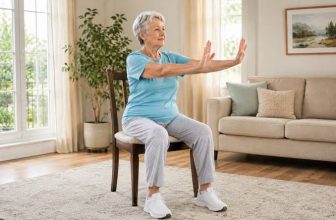
What: During the 20th century Taijiquan underwent several major shifts: it left the exclusive domain of family lineages, masters such as Yang Chengfu and later Chen Man-ch’ing simplified and systematized forms for broader teaching, and the People’s Republic of China promoted standardized short forms for national physical fitness. By mid-century simplified 24- and 48-form routines emerged to make practice accessible to mass populations and for public-health promotion. This era transformed Taijiquan into both a worldwide health exercise and a performance/art form. Encyclopedia Britannica+1
6. Globalization and contemporary practice (late 20th–21st century)
What: From the 1960s onward Taijiquan spread internationally via émigré masters and international competitions, evolving into multiple practice streams: traditional martial training, health and rehabilitation programs, scientific research on balance/fall-prevention, and performance/tourism demonstrations. Today Taijiquan is practiced worldwide by millions, taught in parks, clinics and universities, and is the subject of an expanding body of clinical and biomechanical research. Encyclopedia Britannica+1
7. Anatomy of the art — core components (what to expect in a historical practice)
- Forms (Taolu): choreographed sequences (long family forms → simplified short forms).
- Push-hands (Tui Shou): partner training for sensitivity and applications.
- Neigong/Qigong: internal conditioning, breathing and meditative training.
- Applications: joint locks, throws, strikes and subtle leverage based on yielding.
(These components evolved at different times but together form the classical curriculum.)
8. How historians evaluate the “complete” story — cautions & consensus
- Legend vs. lineage: Zhang Sanfeng remains important mythically; Chen Wangting and the Chen village lineage represent the best historical grounding.
- Multiple valid emphases: Some lineages preserved martial efficacy (e.g., Chen), others shifted earlier toward health and slow practice (e.g., Yang family reforms).
- 20th-century politics and public health shaped what millions now see as “Tai Chi” (short, health-focused routines), which is distinct from vintage family training. ymaa.com+1
Recommended single-page reading
- Britannica — overview of Tai Chi Chuan (historical summary & modern forms). Encyclopedia Britannica
- YMAA (Yang’s Martial Arts Association) — article on Zhang Sanfeng and origin theories (legend vs. Chen lineage). ymaa.com
- Chen-style Taijiquan site — history focused on Chen Village and Chen Wangting (origin of the Chen family system). Madison Chen Style Taijiquan
- YMAA — detailed history of Yang-style Taijiquan and Yang Luchan’s role in dissemination (useful for understanding the dominant modern form). ymaa.com
- Tai Chi for Health Institute — history emphasizing modern health adaptations and the global health movement. Tai Chi for Health Institute