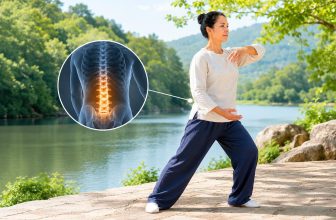
🧠 What research says happens to your brain after practicing Tai Chi
• Improved brain structure and grey-matter volume
In a study of adults (college-age), 8 weeks of Tai Chi (versus brisk walking or no exercise) led to increases in grey matter volume in regions including the left middle occipital gyrus, left superior temporal gyrus, and right middle temporal gyrus.
Other studies on older adults report that long-term Tai Chi practitioners tend to have greater grey matter density (versus non-practitioners), especially in areas like the temporal lobes and hippocampus — areas important for memory, cognition and learning.
• Better brain functional connectivity and network-level reorganization
After 8 weeks of Tai Chi, a study using resting-state fMRI found enhanced brain network “specialization” — specifically, increased “clustering coefficient” and local efficiency in several brain regions (e.g., thalamus, posterior cingulate, olfactory cortex). These changes correlated with improvements in cognitive flexibility. PubMed+1
Over the long term, mind-body exercises including Tai Chi have been associated with increased functional connectivity across regions of the brain (frontal, temporal, occipital, limbic, cerebellar) and better integrity of white-matter networks. Nature+2OUP Academic+2
• Improved cognitive functioning: memory, attention, executive function
In older adults (some with mild cognitive impairment or type 2 diabetes), regular Tai Chi over months has been shown to lead to improvements in global cognitive function, memory, and executive functions (planning, problem-solving, multitasking) — often more so than simple aerobic exercise like walking. JAMA Network+2Nature+2
The complex, coordinated nature of Tai Chi — learning sequences, balancing, synchronizing movement with breath — challenges the brain in ways that appear to improve “mental flexibility” and processing speed.
• Possible neurochemical & neuroprotective effects
Some studies suggest that Tai Chi may increase expression of neurotrophic factors (e.g. Brain‑Derived Neurotrophic Factor, BDNF) and other molecules that support brain health, plasticity, and resilience against degeneration. This could help preserve or even build neural connections over time.
Through its meditative, mindful-breathing aspects, Tai Chi may also reduce stress and lower stress-related neurochemical pathways (e.g. cortisol), which is beneficial because chronic stress tends to impair cognition and brain health. JAMA Network+2AARP+2
• Enhanced mental health, mood, and related brain benefits
Tai Chi’s gentle, meditative, and mindful movement — combining physical coordination with relaxed breathing — may help lower anxiety, improve mood, and support better mental well-being. JAMA Network+2AARP+2
Because mood, stress, and cognitive health are deeply interconnected, improved mental health may in turn support better brain function (memory, focus, resilience). SpringerLink+1
✅ Why Tai Chi might be especially effective (vs. other exercise)
Tai Chi is more than just physical movement: it combines motor coordination, balance, memory/learning (learning sequences), mindfulness/attention, breath control, and social components (if done in classes). This makes it a “whole-brain” workout.
Because it’s low-impact and gentle, Tai Chi is accessible to many ages and fitness levels — which may make consistent, long-term practice easier than more intense exercise.
Its meditative nature may reduce stress and promote relaxation — which by itself can benefit cognitive health. Cleveland Clinic+1
⚠️ What to keep in mind & current limitations
Many of the studies showing structural and functional brain changes have small sample sizes or relatively short durations (e.g., 8–24 weeks).
Some findings are more consistent than others: while grey-matter increases and connectivity enhancements are promising, not all studies found identical changes — and certainty of evidence is often rated low because of methodological limitations, participant differences, and mixed results. Nature+2SpringerLink+2
It’s not always clear how much of the benefit comes from physical movement vs. the mindfulness/breathing vs. social context vs. learning sequences (or a combination).
As with many “mind-body” interventions, results may vary widely between individuals.
🧮 What this means if you practice Tai Chi regularly
If you were to practice Tai Chi — say 3–4 times per week for a few months — the evidence suggests you could expect benefits such as: improved memory and cognitive flexibility, better attention and mental clarity, possibly changes in brain structure (especially if older), improved stress management and mood, and overall enhanced brain health and resilience.
Over longer periods (many months to years), consistent practice might help promote long-term brain health, potentially even slowing age-related cognitive decline.
📚 Useful Studies & Reviews (Links)
Overview of health and brain benefits of Tai Chi (general audience) Cleveland Clinic+1
Tai Chi Chuan Alters Brain Functional Network Plasticity and Promotes Cognitive Flexibility — fMRI study, 8 weeks Frontiers+1
Tai Chi Chuan vs General Aerobic Exercise in Brain Plasticity: A Multimodal MRI Study — 8 week structural + functional MRI comparison Nature
Effects of Tai Chi on Cognitive Function in Adults with Type 2 Diabetes and Mild Cognitive Impairment — 2023 randomized clinical trial JAMA Network
The neurobiological effects of mind–body exercise: meta-analysis of neuroimaging studies (Tai Chi, yoga, etc.) Nature
Review: Tai Chi and cognitive / brain structural and functional changes in older adults SpringerLink+1